Sunday, October 30, 2016

Pope who turned his back on Hitler


Image result


by


 Damien F. Mackey


“The children of Fatima warned us that Our Lady foretold if the people did not repent, a greater war than World War I would follow, under the reign of Pope Pius XI,

after a strange light in the night sky over Europe”.


Introduction


Moses’s invitations and warnings to the Israelites - indeed, to all of us - were conditional, preceded by, respectively, “If …” (Hebrew: אִם), and: “If not …” (Hebrew:אִם-לֹא ).

Thus, for instance, Deuteronomy 28:1-2: “If you fully obey the Lord your God and carefully follow all his commands I give you today, the Lord your God will set you high above all the nations on earth. All these blessings will come on you and accompany you if you obey the Lord your God …”.

The manifold blessings consequent to this obedience are then listed (vv. 3-14).

“However” (28:15), “if you do not obey the Lord your God and do not carefully follow all his commands and decrees I am giving you today, all these curses will come on you and overtake you …”.

There then follows a long list of the most horrifying curses (vv. 16-68).


But a hard-hearted Pharaoh and his minions, and the ‘iron furnace’ of Egyptian oppression (Deuteronomy 4:20): “But as for you, the Lord took you and brought you out of the iron-smelting furnace, out of Egypt, to be the people of his inheritance, as you now are”, were only pale foreshadowings of the terrible eschatological reality of a miserific Devil and his demons, and eternal servitude in the fires of Hell (one of the Fatima visions).


Image result for fatima vision of hell


Pius XI and the ‘Strange Light’


The modern message of Fatima (which is, in its essence, an ancient biblical one) is structured along Mosaïc lines, “If” and “If not”. It is very much to the point (July 13, 1917):


‘If my requests are heard, Russia will be converted and there will be peace. If not, she will spread her errors throughout the world, fomenting wars and persecution of the Church. The good will suffer martyrdom; the Holy Father will suffer much; different nations will be annihilated’.


‘If only you knew the things that make for peace’ (Luke 19:42).

Well, for we who live in the Fatima Era (which will turn 100 next year: 2017), it has been spelled out for us. The bottom line is Obedience to the Will of God!

Either that, or, for instance, the terrible Second World War. By then, according to the following piece, “the Fatima prophecies cease to be conditional”.


…. The children of Fatima warned us that Our Lady foretold if the people did not repent, a greater war than World War I would follow, under the reign of Pope Pius XI, after a strange light in the night sky over Europe.

On January 25th 1938, during the reign of Pope Pius XI, a solar storm produced an Aurora Borealis that was seen all over Europe and North America — as far south as California in the United States.

These lights were seen by Hitler himself and he took it as a “sign” to begin his war plans.

On February 4th 1938, less than two weeks after the aurora was seen by the world, Hitler promoted himself to military chief in Germany.

A month later he marched his army into Austria.

This was one of the early aggressions that started World War II. At that point the Fatima prophecies cease to be conditional. ….

[End of quote]


Of interest in this regard, "on January 25, 1938, a remarkable display of aurora borealis was visible across Europe, the year before World War II began." The book, The Secrets of Fatima elaborates: "This aurora appeared as far south as Galicia, Spain, where Sister Lucy was then cloistered, and she, the only survivor of the three Fatima shepherds, recognized it immediately as the sign. Visible even to Pius XI in Rome, the unprecedented aurora was accompanied by a ‘crackling' sound, possibly attributable to discharges of atmospheric energy. Indeed, in many areas of Europe, panic broke out, as the populace concluded that the world was on fire and that the End had come."


[End of quote]


Pius XI and Hitler


------------------------------------------------------------

“Spiritually”, the pope said, “we are all Semites”.

------------------------------------------------------------


Pope Pius XI's Last Crusade

.... 


When people think of the Vatican and World War II, they think immediately of Pius XII, the controversial pontiff between 1939 and 1958. But before him, there was a little-remembered pope, Pope Pius XI, who was loudly outspoken against the Nazis and was determined to call the world's attention to their atrocities. "The Pope's Last Crusade" tells that story, along with that of the pope's partnership with an American Jesuit, which breaks new ground about war-time conspiracies within the Vatican.

Pope Pius XI had left the Vatican in late April 1938, earlier than usual for his summer retreat at Castel Gandolfo. He intended it to be an obvious snub directed at Adolf Hitler who was meeting the first week in May with Italian leader Benito Mussolini.

The pope rejected being present while the "crooked cross of neo-paganism" flew over Rome. Hitler's anti-Semitic campaign had become the pope's great preoccupation.

Many scholars think that Pius XI's crusade against Hitler, which took place in the last months of his life, could have changed course of events, possibly even the severity of later atrocities against the Jews.

As the Nazis increased their threats in their march toward war, the pope realized that it might at that moment be the Jews, but then it would be the Catholics and finally the world. He could see that the Nazis would stop at nothing less than world domination.

Pius had few allies at the Vatican, where many even believed that Communism was a greater danger than Fascism. Therefore, many prelates thought, the enemy of their Communist enemy must be their friend.

But Pius saw Hitler as an insane presence in the world and had been searching for a means of applying pressure and rallying international leaders against Nazism. It would not be easy. He was 82 years old and increasingly ill. At the same time, powerful cardinals and bishops around him feared the pope's activism against Hitler. In particular, the Vatican secretary of state, Cardinal Eugenio Pacelli, counseled caution in challenging Hitler and Mussolini. Pacelli eventually would … succeed Pius XI.

The pope, undeterred, reached out for help beyond the walls of the Vatican, seeking out an American Jesuit journalist, John LaFarge, who had just come to Italy. LaFarge had just written a book, "Interracial Justice," which portrayed the lives of American blacks who lived in the poorest strata of society. While LaFarge defended African Americans against the myth of racial superiority, the concept applies, he wrote, "to all races and conditions of men ... all tribes and races, Jew and Gentile alike..." (Twenty-five years later, in 1963, LaFarge stood with his friend Martin Luther King at the March on Washington.)

The pope summoned LaFarge to Castel Gandolfo on June 25, 1938. The American priest was shocked that the pope even knew his name. Pius told LaFarge he was to write an encyclical that would use the same reasoning he employed when discussing racism in the United States. It was to be the strongest statement ever made by the Vatican, in defense of the Jews and rejecting the Nazi doctrine of anti-Semitism.

Sworn to silence, LaFarge took up the papal assignment clandestinely in Paris. The pope's directive, however, had thrown LaFarge into the hazy realm of Vatican politics. The leader of the Jesuit order worldwide, Wlodimir Ledochowski, promised the pope and LaFarge that he would facilitate production of the encyclical. Privately, Ledochowski, an anti-Semite, conspired to block LaFarge at every turn.

In late September 1938, after about three months of work, LaFarge traveled to Rome with his papal mission complete. His superior, Ledochowski, welcomed him and promised to deliver the encyclical right away to the pope. He dismissed LaFarge and directed him to return home to the United States. Ledochowski did take care of the speech -- by burying it for months in Vatican bureaucracy.

The pontiff, unaware of these machinations, was stepping up his criticism of … Hitler, and Mussolini. He criticized Mussolini's imitation of systematic attacks on Jews in Germany and Austria. As in Germany, Jews in Italy were banned from attending school, from holding public positions or serving as doctors, lawyers and in other professional functions. Pius XI condemned these actions.

"Spiritually," the pope said, "we are all Semites."

In the fall of 1938, LaFarge realized finally that the pope still had not received the encyclical. He wrote a letter directly to the pope, implying that Ledochowski had the document in hand for months already. Pius XI demanded delivery, but did not receive it until Jan. 21, 1939 with a note from Ledochowski, who warned that the language of the document appeared to be excessive. He advised caution.

The pope, finally with LaFarge's text, planned immediately to issue the encyclical after a meeting with bishops on Feb. 11, in which he would condemn fascism. He worked on that speech on his own, jotting down ideas, rewriting and editing it by hand. Rumors, meanwhile, had reached Mussolini that the pope might be planning to excommunicate him or even Hitler, also a Catholic, a blow that could actually damage their popular power base.

Pius XI died on Feb. 10, 1939, a day before his planned speech. Vatican doctors said he had suffered complications of a heart attack, and despite administering stimulants, they had been unable to revive him.

Bishops in some quarters grumbled about the circumstances of his death and questioned the kind of stimulants he had been given in an attempt to revive him. Cardinal Eugene Tisserant of France, the pope's best friend and a former French intelligence officer, wrote in his diary that the pope had been murdered.

Pacelli, the secretary of state, became Pius XII, and the Vatican immediately toned down its vocal protests against Hitler and Mussolini. One historian, Conor Cruise O'Brien, the noted Irish writer and politician, in 1989 said that those months in 1938 were crucial as Hitler measured how the world would react to his campaign against the Jews.

"Had Pius XI been able to deliver the encyclical he planned, the green light would have changed to red. The Catholic Church in Germany would have been obliged to speak out against the persecution of the Jews. Many Protestants, inside and outside Germany, would have likely to follow its example."

How effective Pius XI's efforts might have been can never be known. It was only clear that he took a stance in favor of absolute morality and defended to his last breath his principles of decency and humanity, nothing more, nothing less. ....


Image result for hitler 1938

Friday, October 21, 2016

Philosophical Guardianship


That the frenetic pursuit of technology alone - which characterises our own era - is not actually civilising, is argued in the following section from Berkeley’s Renovation of Philosophy (Martinus Nijhoff, 1968, pp. 136-137), written by Dr. Gavin Ardley (by far our favourite philosopher of science):  


(4) Emergence from tribe


Readers of Plato's Republic are wont to suppose, complacently, that the men in Plato's Cave are common vulgar men given to sensual enjoyment. Nothing could be further from the truth. They are ourselves. Especially are they ourselves insofar as we compliment ourselves on our intellectual attainments. When we allow techne to develop into tribe … [tribe: empirical routine devoid of insight e.g. Gorgias 463 b]; allow work (of whatever kind) to sink into meaningless routine, an end in itself; when wonder is no longer there to enliven; when humility has departed; and standards have drifted into identification with particulars: Then we are sorry Cave-dwellers.


The craftsman who allows his intelligence to atrophy, sinks into a state of contentment with routine, has forsaken techne for tribe. But his case is mild compared with the tribe of men given to intellectual pursuits. The vice is magnified by the exalted level from which such men have fallen. And most grievous of all is the case of the fallen philosopher: he is the guardian, the man who should be keeping wonder alive. When he allows wonder to die within him, he continues to go through the motions of philosophising; to outward appearance he is a wise man; but inwardly he is merely exercising his intellectual dexterity in an endless round of futility. Dialectic for him ossifies into conditioned response, or is transformed into its savage counterpart, eristic. Metaphysics declines into mere system, or revolts into the realms of the absurd.
Tribe is the art of the absurd.
....


Saturday, October 15, 2016

The anti-Catholic bigotry of Hillary Clinton’s campaign has been laid bare in emails hacked by Wikileaks

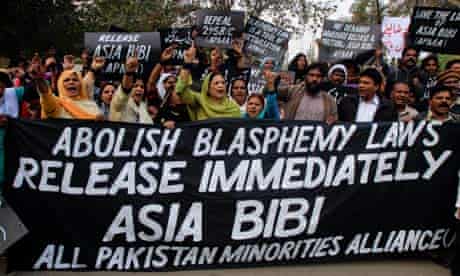
Asia Bibi
Supporters of All Pakistan Minorities Alliance chant during a rally calling for an end to the blasphemy laws and the release of Asia Bibi. Photograph: KM Chaudary/AP 

Top Clinton officials ridicule Catholics in the emails and call their faith “severely backwards”, fuelling fears of a modern Kulturkampf.

But it’s no surprise that left-wing elites despise Catholics and Christianity, in general.

That’s why we are berated constantly about Islamophobia while the plight of the most persecuted religious group in the world is ignored.

Christians could soon be extinct from whole swathes of the Middle East and Africa, ethnically cleansed by Islamists.
Asia Bibi, who faces the death penalty for blasphemy. (Pic: Supplied)
In Pakistan, for instance, Christian mother of five Asia Bibi has been on death row for six years, convicted of blasphemy after drinking water from the same bowl as Muslims while picking berries.
Last week, Liberal Senator Eric Abetz and Australian Christian Lobby boss Lyle Shelton took on her cause, meeting with visiting British Pakistani Christian Association chairman Wilson Chowdery, who wants Australia to tie its $47 million annual aid to Pakistan to blasphemy law reform.
Chowdery has also asked Immigration Minister Peter Dutton to take in 100 Christian refugees from Pakistan each year as part of our humanitarian program.

Prioritising Christian refugees should be a no-brainer, but the left-wing elites of the West regard the idea as Islamophobic bigotry. US President Obama once called it “shameful”.

The hypocrisy is laughable.

....
Taken from: http://www.dailytelegraph.com.au/rendezview/the-lefts-bigotry-and-hypocrisy-toward-catholics-and-christians-is-alive-and-well/news-story/284e003986921189e24ea1fb19e41e04

Tuesday, September 20, 2016

Pope Francis slams ‘paganism of indifference’

Pope Francis visits refugees at Mòria refugee camp on the Greek island of Lesbos April 16, 2016. Credit: L'Osservatore Romano.

.- In efforts for peace, indifference is the greatest sickness of our time, Pope Francis said at an interreligious summit in Assisi on Tuesday.
“It is a virus that paralyzes, rendering us lethargic and insensitive, a disease that eats away at the very heart of religious fervor, giving rise to a new and deeply sad paganism: the paganism of indifference.”
“We cannot remain indifferent,” he said. “Today the world has a profound thirst for peace.”
The Pope spoke Sept. 20 during an international interreligious gathering marking the 30th anniversary of the World Day of Prayer for Peace convoked by St. John Paul II in 1986.
The event, held in different locations, has been organized every year by the Sant’Egidio community. The last day of prayer led by a Pope, however, was held by Benedict XVI in 2011, to commemorate the 25th anniversary of the first historic meeting in Assisi.
At this year’s gathering in Assisi, Pope Francis focused on humanity’s thirst for peace and the toxic nature of self-interest and apathy in the face of violence around the world.
“Prayer and the desire to work together are directed towards a true peace that is not illusory: not the calm of one who avoids difficulties and turns away, if his personal interests are not at risk,” he said.
Peace “is not the cynicism of one who washes his hands of any problem that is not his,” Francis continued. “It is not the virtual approach of one who judges everything and everyone using a computer keyboard, without opening his eyes to the needs of his brothers and sisters.”
Above all, peace is a gift of God, Pope Francis said, explaining that it is only with his help that our works can bear fruit.
He acknowledged the distances many people traveled to be at the summit in Assisi, but stressed that working together for peace is not merely a physical movement, but most of all a spiritual movement – a spiritual response – of becoming more open to God and to our fellow brothers and sisters.
“In Lesbos, my dear brother, the Ecumenical Patriarch Bartholomew, and I saw the sorrow of war in the eyes of the refugees, the anguish of peoples thirsting for peace.”
“I am thinking of the families, whose lives have been shattered; of the children who have known only violence in their lives; of the elderly, forced to leave their homeland.”
Francis also spoke out against war and arms trading, which he said are the reason for much of the poverty around the world.
“We do not want these tragedies to be forgotten. Rather together we want to give voice to all those who suffer, to all those who have no voice and are not heard. They know well, often better than the powerful, that there is no tomorrow in war, and that the violence of weapons destroys the joy of life.”
Speaking out against religious fundamentalism, the Pope said, “peace alone, and not war, is holy!”
“We never tire of repeating that the name of God cannot be used to justify violence,” he said. “Peace, a thread of hope that unites earth to heaven, a word so simple and difficult at the same time.”
Peace means forgiveness, openness to dialogue, cooperation, and education, Pope Francis said, noting how leaders from all branches of Christianity were in attendance, all united in their prayer for peace.
“Prayer and concrete acts of cooperation help us to break free from the logic of conflict and to reject the rebellious attitudes of those who know only how to protest and be angry,” he said.
Our path toward peace “leads us to immersing ourselves in situations and giving first place to those who suffer,” the Pope stated.
“To taking on conflicts and healing them from within; to following ways of goodness with consistency, rejecting the shortcuts offered by evil; to patiently engaging processes of peace, in good will and with God’s help.”


By Hannah Brockhaus


….
Taken from: http://www.catholicnewsagency.com/news/in-assisi-pope-francis-slams-paganism-of-indifference-48548/

Sunday, September 18, 2016

Vote on marriage equality reveals the haters of the Left

Thursday, September 1, 2016

Pope Francis: Message on World Day of Prayer for Creation


Mt. Ararat as seen from a memorial to Armenians killed by the Ottoman Turks in Yerevan, Armenia, Saturday, June 25, 2016 - AP                      

Mt. Ararat as seen from a memorial to Armenians killed by the Ottoman Turks in Yerevan, Armenia, Saturday, June 25, 2016 - AP

01/09/2016 12:00
(Vatican Radio) Pope Francis has issued a Message to mark the World Day of Prayer for the Care of Creation. Taken from the Extraordinary Jubilee Year and his encyclical letter, Laudato si’, the theme of the Holy Father’ Message is: Show mercy to our common home.
Below, please find the full text
*******************************************************
MESSAGE OF HIS HOLINESS
POPE FRANCIS
FOR THE CELEBRATION OF THE
WORLD DAY OF PRAYER FOR THE CARE OF CREATION
1 SEPTEMBER 2016
Show Mercy to our Common Home
United with our Orthodox brothers and sisters, and with the support of other Churches and Christian communities, the Catholic Church today marks the “World Day of Prayer for the Care of Creation”. This Day offers “individual believers and communities a fitting opportunity to reaffirm their personal vocation to be stewards of creation, to thank God for the wonderful handiwork which he has entrusted to our care, and to implore his help for the protection of creation as well as his pardon for the sins committed against the world in which we live.” [1]
It is most encouraging that concern for the future of our planet is shared by the Churches and Christian communities, together with other religions. Indeed, in past decades numerous efforts have been made by religious leaders and organizations to call public attention to the dangers of an irresponsible exploitation of our planet. Here I would mention Patriarch Bartholomew of Constantinople who, like his predecessor Patriarch Dimitrios, has long spoken out against the sin of harming creation and has drawn attention to the moral and spiritual crisis at the root of environmental problems. In response to a growing concern for the integrity of creation, the Third European Ecumenical Assembly in Sibiu in 2007 proposed celebrating a “Time for Creation” during the five weeks between 1 September (the Orthodox commemoration of God’s creation) and 4 October (the commemoration of Francis of Assisi in the Catholic Church and some other Western traditions). This initiative, supported by the World Council of Churches, has since inspired many ecumenical activities in different parts of the world. It is also encouraging that throughout the world similar initiatives promoting environmental justice, concern for the poor and responsible social commitment have been bringing together people, especially young people, from diverse religious backgrounds. Christians or not, as people of faith and goodwill, we should be united in showing mercy to the earth as our common home and cherishing the world in which we live as a place for sharing and communion.
1. The earth cries out …
With this Message, I renew my dialogue with “every person living on this planet” (Laudato Si’, 3) about the sufferings of the poor and the devastation of the environment. God gave us a bountiful garden, but we have turned it into a polluted wasteland of “debris, desolation and filth” (ibid., 161). We must not be indifferent or resigned to the loss of biodiversity and the destruction of ecosystems, often caused by our irresponsible and selfish behaviour. “Because of us, thousands of species will no longer give glory to God by their very existence, nor convey their message to us. We have no such right” (ibid., 33).
Global warming continues, due in part to human activity: 2015 was the warmest year on record, and 2016 will likely be warmer still. This is leading to ever more severe droughts, floods, fires and extreme weather events. Climate change is also contributing to the heart-rending refugee crisis. The world’s poor, though least responsible for climate change, are most vulnerable and already suffering its impact.
As an integral ecology emphasizes, human beings are deeply connected with all of creation. When we mistreat nature, we also mistreat human beings. At the same time, each creature has its own intrinsic value that must be respected. Let us hear “both the cry of the earth and the cry of the poor” (Laudato Si’, 49), and do our best to ensure an appropriate and timely response.
2. … for we have sinned
God gave us the earth “to till and to keep” (Gen 2:15) in a balanced and respectful way. To till too much, to keep too little, is to sin.
My brother, Ecumenical Patriarch Bartholomew has courageously and prophetically continued to point out our sins against creation.  “For human beings… to destroy the biological diversity of God’s creation; for human beings to degrade the integrity of the earth by causing changes in its climate, by stripping the earth of its natural forests or destroying its wetlands; for human beings to contaminate the earth’s waters, its land, its air, and its life – these are sins.” Further, “to commit a crime against the natural world is a sin against ourselves and a sin against God.” [2]
In the light of what is happening to our common home, may the present Jubilee of Mercy summon the Christian faithful “to profound interior conversion” (Laudato Si’, 217), sustained particularly by the sacrament of Penance. During this Jubilee Year, let us learn to implore God’s mercy for those sins against creation that we have not hitherto acknowledged and confessed.  Let us likewise commit ourselves to taking concrete steps towards ecological conversion, which requires a clear recognition of our responsibility to ourselves, our neighbours, creation and the Creator (ibid., 10 and 229).
3. An examination of conscience and repentance
The first step in this process is always an examination of conscience, which involves “gratitude and gratuitousness, a recognition that the world is God’s loving gift, and that we are called quietly to imitate his generosity in self-sacrifice and good works… It also entails a loving awareness that we are not disconnected from the rest of creatures, but joined in a splendid universal communion. As believers, we do not look at the world from without but from within, conscious of the bonds with which the Father has linked us to all beings” (Laudato Si’, 220).
Turning to this bountiful and merciful Father who awaits the return of each of his children, we can acknowledge our sins against creation, the poor and future generations. “Inasmuch as we all generate small ecological damage,” we are called to acknowledge “our contribution, smaller or greater, to the disfigurement and destruction of creation.”[3] This is the first step on the path of conversion.
In 2000, also a Jubilee Year, my predecessor Saint John Paul II asked Catholics to make amends for past and present religious intolerance, as well as for injustice towards Jews, women, indigenous peoples, immigrants, the poor and the unborn. In this Extraordinary Jubilee of Mercy, I invite everyone to do likewise. As individuals, we have grown comfortable with certain lifestyles shaped by a distorted culture of prosperity and a “disordered desire to consume more than what is really necessary” (Laudato Si’, 123), and we are participants in a system that “has imposed the mentality of profit at any price, with no concern for social exclusion or the destruction of nature.”[4] Let us repent of the harm we are doing to our common home.
After a serious examination of conscience and moved by sincere repentance, we can confess our sins against the Creator, against creation, and against our brothers and sisters. “The Catechism of the Catholic Church presents the confessional as the place where the truth makes us free.”[5] We know that “God is greater than our sin,”[6] than all our sins, including those against the environment. We confess them because we are penitent and desire to change. The merciful grace of God received in the sacrament will help us to do so.
4. Changing course
Examining our consciences, repentance and confession to our Father who is rich in mercy lead to a firm purpose of amendment. This in turn must translate into concrete ways of thinking and acting that are more respectful of creation.  For example: “avoiding the use of plastic and paper, reducing water consumption, separating refuse, cooking only what can reasonably be consumed, showing care for other living beings, using public transport or car-pooling, planting trees, turning off unnecessary lights, or any number of other practices” (Laudato Si’, 211). We must not think that these efforts are too small to improve our world. They “call forth a goodness which, albeit unseen, inevitably tends to spread” and encourage “a prophetic and contemplative lifestyle, one capable of deep enjoyment free of the obsession with consumption” (ibid., 212, 222).
In the same way, the resolve to live differently should affect our various contributions to shaping the culture and society in which we live. Indeed, “care for nature is part of a lifestyle which includes the capacity for living together and communion” (Laudato Si’, 228). Economics and politics, society and culture cannot be dominated by thinking only of the short-term and immediate financial or electoral gains. Instead, they urgently need to be redirected to the common good, which includes sustainability and care for creation.
One concrete case is the “ecological debt” between the global north and south (cf. Laudato Si’, 51-2). Repaying it would require treating the environments of poorer nations with care and providing the financial resources and technical assistance needed to help them deal with climate change and promote sustainable development.
The protection of our common home requires a growing global political consensus. Along these lines, I am gratified that in September 2015 the nations of the world adopted the Sustainable Development Goals, and that, in December 2015, they approved the Paris Agreement on climate change, which set the demanding yet fundamental goal of halting the rise of the global temperature. Now governments are obliged to honour the commitments they made, while businesses must also responsibly do their part.  It is up to citizens to insist that this happen, and indeed to advocate for even more ambitious goals.
Changing course thus means “keeping the original commandment to preserve creation from all harm, both for our sake and for the sake of our fellow human beings.”[7] A single question can keep our eyes fixed on the goal: “What kind of world do we want to leave to those who come after us, to children who are now growing up?” (Laudato Si’, 160).
5. A new work of mercy
“Nothing unites us to God more than an act of mercy, for it is by mercy that the Lord forgives our sins and gives us the grace to practise acts of mercy in his name.”[8]
To paraphrase Saint James, “we can say that mercy without works is dead … In our rapidly changing and increasingly globalized world, many new forms of poverty are appearing. In response to them, we need to be creative in developing new and practical forms of charitable outreach as concrete expressions of the way of mercy.”[9]
The Christian life involves the practice of the traditional seven corporal and seven spiritual works of mercy.[10] “We usually think of the works of mercy individually and in relation to a specific initiative: hospitals for the sick, soup kitchens for the hungry, shelters for the homeless, schools for those to be educated, the confessional and spiritual direction for those needing counsel and forgiveness… But if we look at the works of mercy as a whole, we see that the object of mercy is human life itself and everything it embraces.”[11]
Obviously “human life itself and everything it embraces” includes care for our common home. So let me propose a complement to the two traditional sets of seven: may the works of mercy also include care for our common home.
As a spiritual work of mercy, care for our common home calls for a “grateful contemplation of God’s world” (Laudato Si, 214) which “allows us to discover in each thing a teaching which God wishes to hand on to us” (ibid., 85). As a corporal work of mercy, care for our common home requires “simple daily gestures which break with the logic of violence, exploitation and selfishness” and “makes itself felt in every action that seeks to build a better world” (ibid., 230-31).
6. In conclusion, let us pray
Despite our sins and the daunting challenges before us, we never lose heart. “The Creator does not abandon us; he never forsakes his loving plan or repents of having created us… for he has united himself definitively to our earth, and his love constantly impels us to find new ways forward” (Laudato Si, 13; 245). In a particular way, let us pray on 1 September, and indeed throughout the year:
“O God of the poor,
help us to rescue the abandoned
and forgotten of this earth,
who are so precious in your eyes…
God of love, show us our place in this world
as channels of your love
for all the creatures of this earth” (ibid., 246),
God of mercy, may we receive your forgiveness
and convey your mercy throughout our common home.
Praise be to you!
Amen.
 

[1] Letter for the Establishment of the “World Day of Prayer for the Care of Creation” (6 August 2015).
[2] Address in Santa Barbara, California (8 November 1997).
[3] Bartholomew I, Message for the Day of Prayer for the Protection of Creation (1 September 2012).
[4] Address to the Second World Meeting of Popular Movements, Santa Cruz de la Sierra, Bolivia (9 July 2015).
[5] Third Meditation, Retreat during the Jubilee for Priests, Basilica of Saint Paul Outside the Walls, Rome (2 June 2016).
[6] General Audience of 30 March 2016.

[7] Bartholomew I, Message for the Day of Prayer for the Protection of Creation, 1.9.1997.

[8] First Meditation, Retreat during the Jubilee for Priests, Basilica of Saint John Lateran, Rome (2 June 2016).
[9] General Audience of 30 June 2016.
[10] The corporal works of mercy are feeding the hungry, giving drink to the thirsty, clothing the naked, welcoming the stranger, visiting the sick, visiting the imprisoned, burying the dead.  The spiritual works of mercy are counselling the doubtful, instructing the ignorant, admonishing sinners, consoling the afflicted, forgiving offenses, bearing patiently those who do us ill, praying for the living and the dead.
[11] Third Meditation, Retreat for the Jubilee for Priests, Basilica of Saint Paul Outside the Walls, Rome (2 June 2016).


....
Taken from: http://en.radiovaticana.va/news/2016/09/01/pope_francis_message_on_world_day_of_prayer_for_creation/1255035